Nature’s cleanup crew
Cockroaches, other insects, fallen fruit, and sometimes mice and rats are all on an opossum’s menu. They also help clean up dead animals. That quiet visitor has a role in your neighborhood.
 Awesome Opossums
01 / Meet your neighbor
A quiet visitor. A resourceful mother. A native worth looking out for.
That quiet visitor in your yard? Usually just passing through, looking for food and a little room to carry on.
More likely to avoid a confrontation than start one.
Meet your neighbor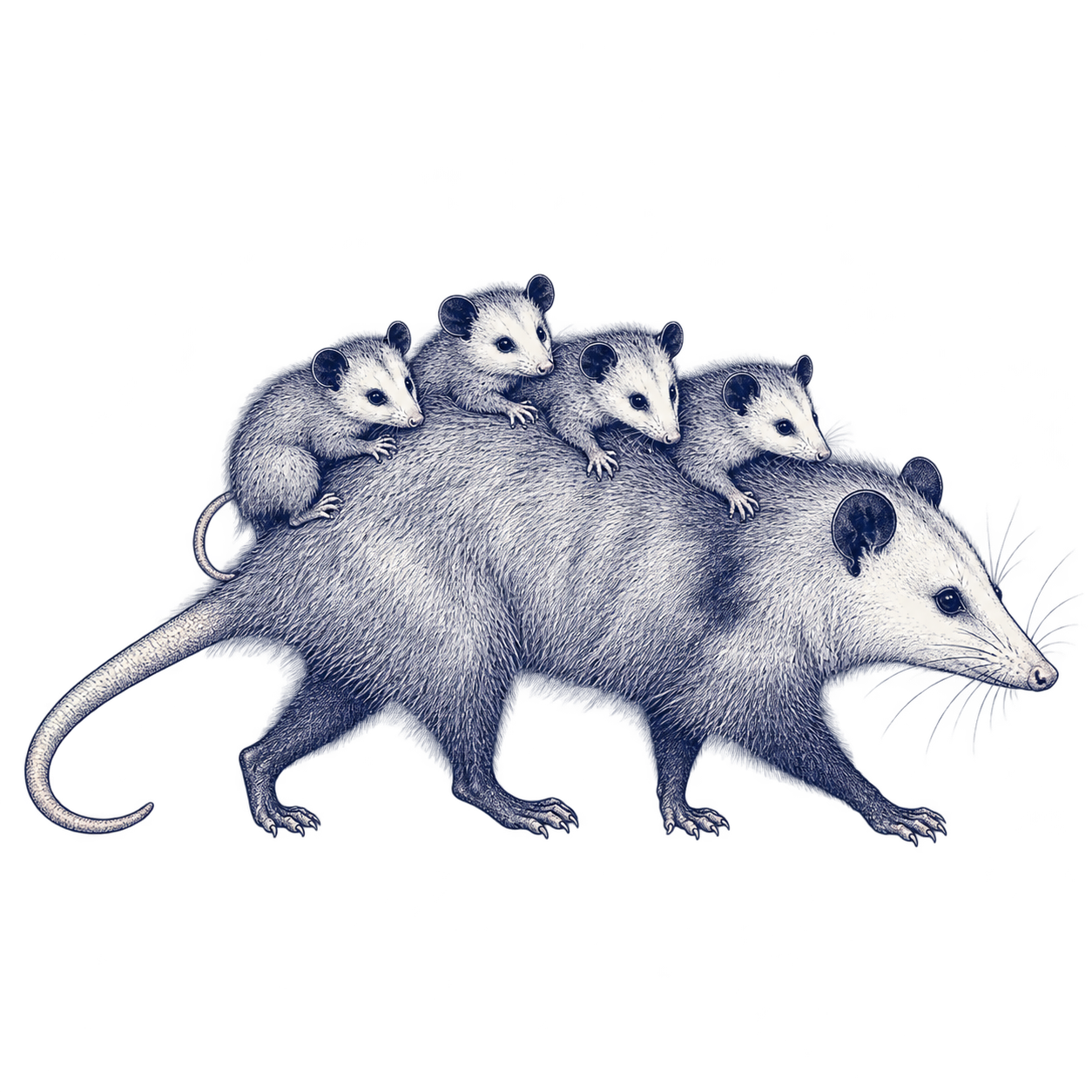
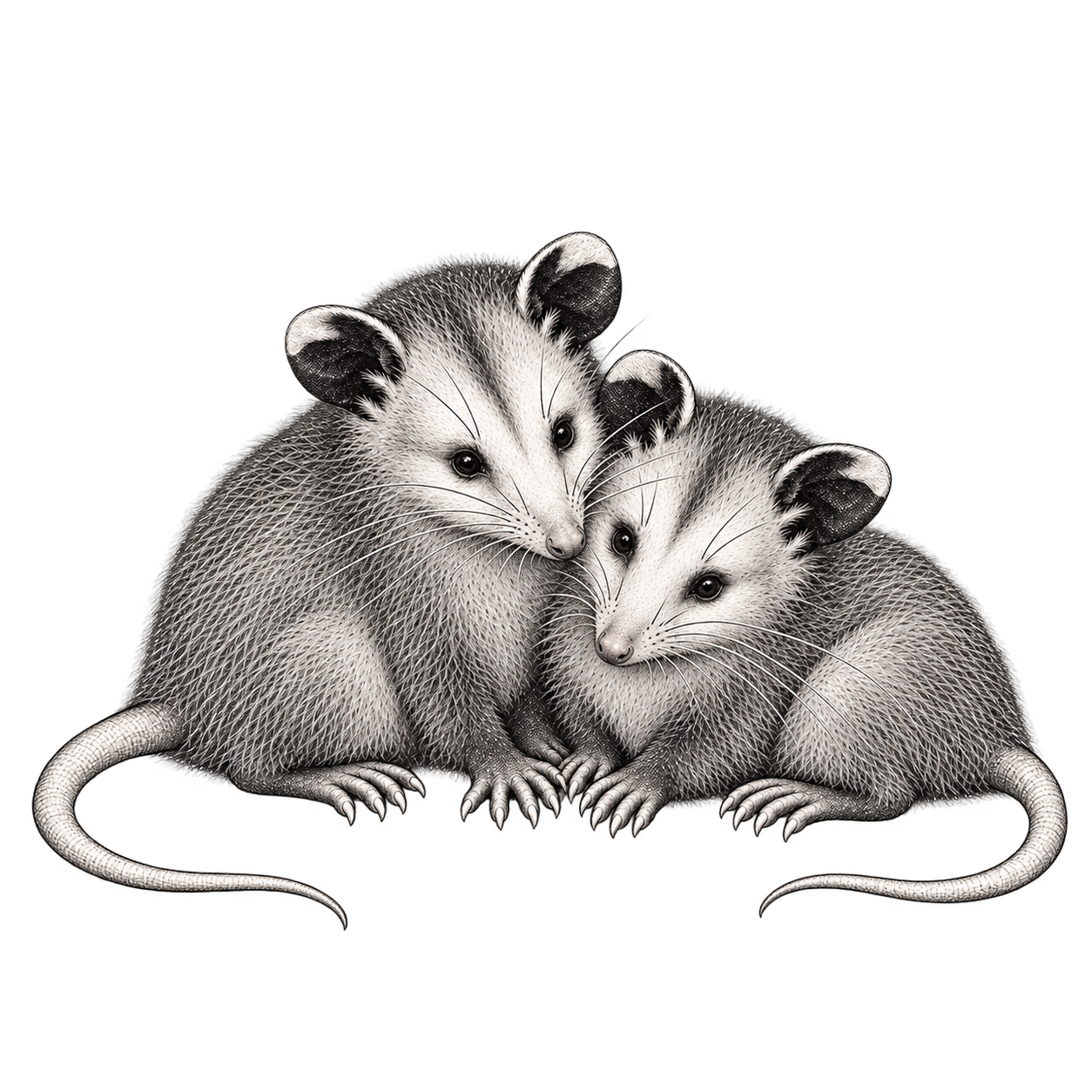
A little family. A familiar neighbor.
02 / A very different family
No passport required.
The pouch is standard.
The Virginia opossum is the only marsupial native to the United States and Canada. Like kangaroos and koalas, its young begin life remarkably small and continue developing in their mother’s pouch.
As the young grow, they may ride on their mother’s back, small paws clinging to her fur. That quiet visitor may be a mother carrying her young as she looks for food. Eventually, each youngster sets off on its own.
An original local. Worth looking out for.
03 / A closer look
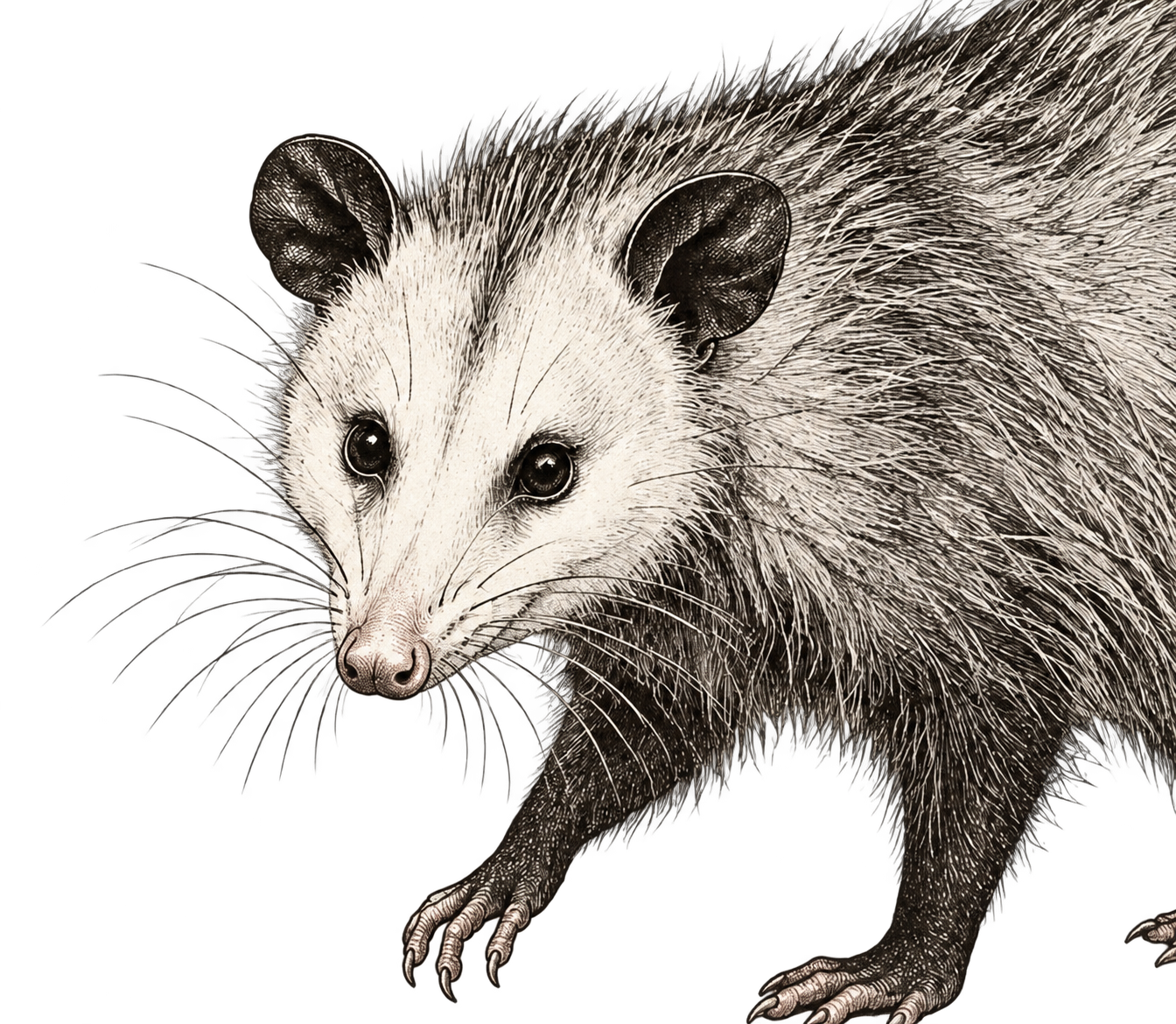
Every detail has a purpose.
Select a numbered feature to meet the animal behind the first impression.
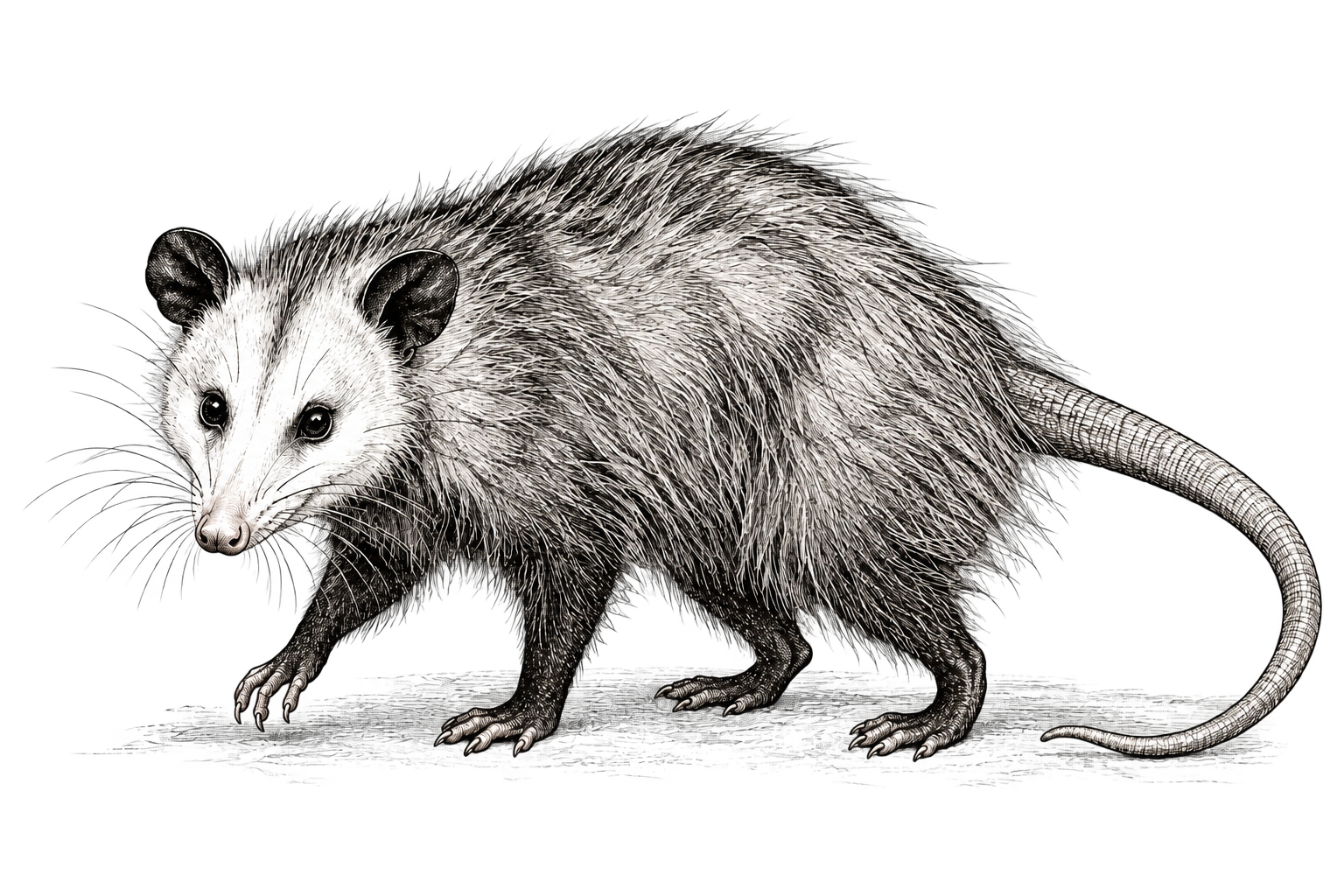 Fig. 02 An extraordinary everyday animal
A strong sense of smell helps an opossum track down food, often with its pointed nose close to the ground.
04 / Small animal, remarkable abilities
Built for getting by.
Surprisingly good at it.
Cockroaches, other insects, fallen fruit, and sometimes mice and rats are all on an opossum’s menu. They also help clean up dead animals. That quiet visitor has a role in your neighborhood.
“Playing possum” is an involuntary response to intense fear. Looking and smelling dead can persuade a predator to leave.
Woodlands, suburbs and cities can all be home. These adaptable foragers find shelter and food in many environments.
Opossums resist venom from some snakes. A remarkable adaptation, though it doesn’t make them invulnerable.
05 / Let’s set the record straight
There’s more to this neighbor than a reputation. Open a myth to see what’s really going on.
They’re marsupials, a different mammal group from rodents. Their young develop in a pouch.
Daytime activity alone doesn’t mean illness. Rabies is rare in opossums, but they are not immune. Keep your distance and seek wildlife advice if an animal appears injured or behaves unusually.
Opossums usually try to avoid confrontation. Hissing and showing teeth mean they need space. They can bite in self-defense if cornered or handled. Step back and leave a clear route away.
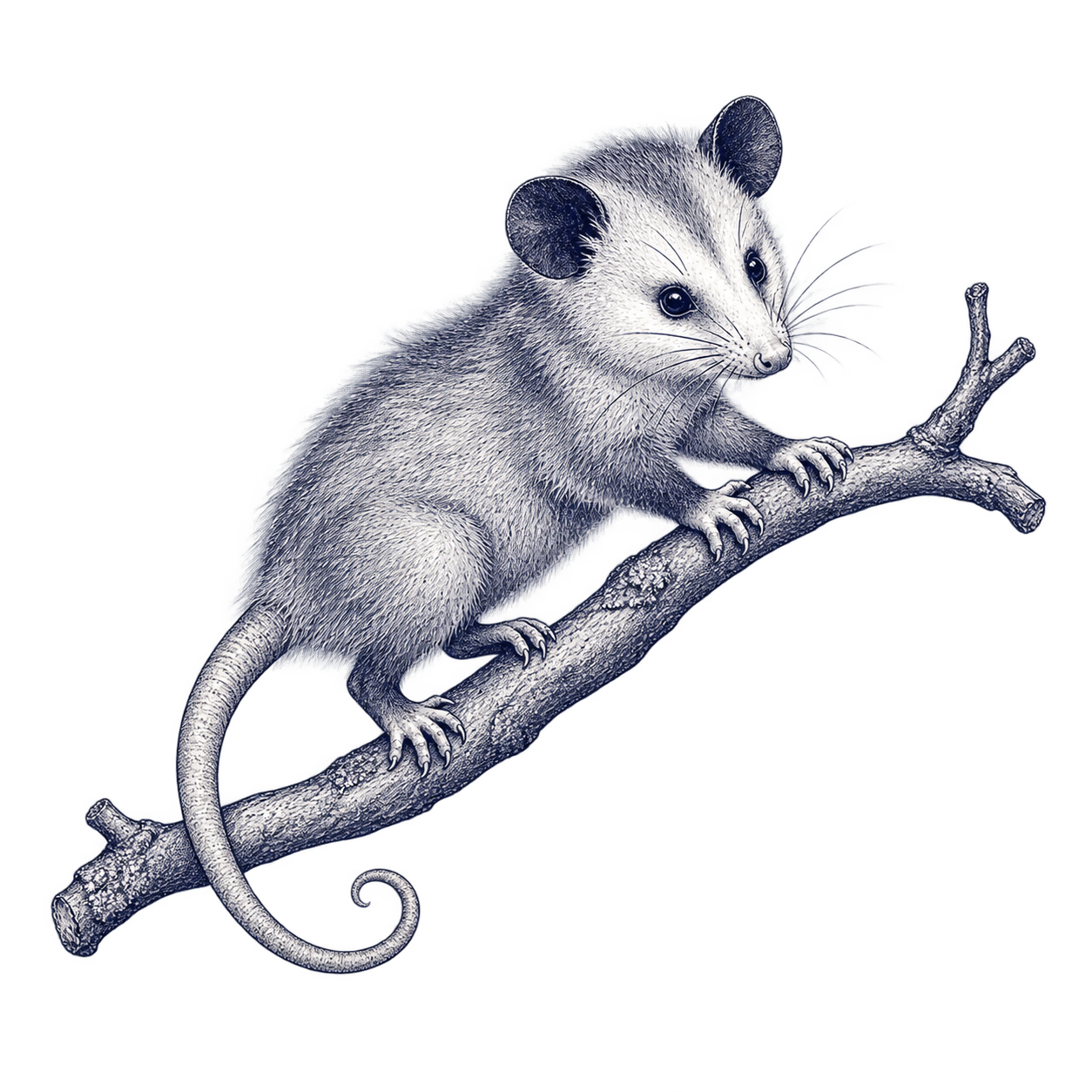
The tail helps with balance, gripping and carrying nesting material. Adult opossums don’t sleep suspended by it.
06 / After hours
Your yard has a whole
other life after dark.
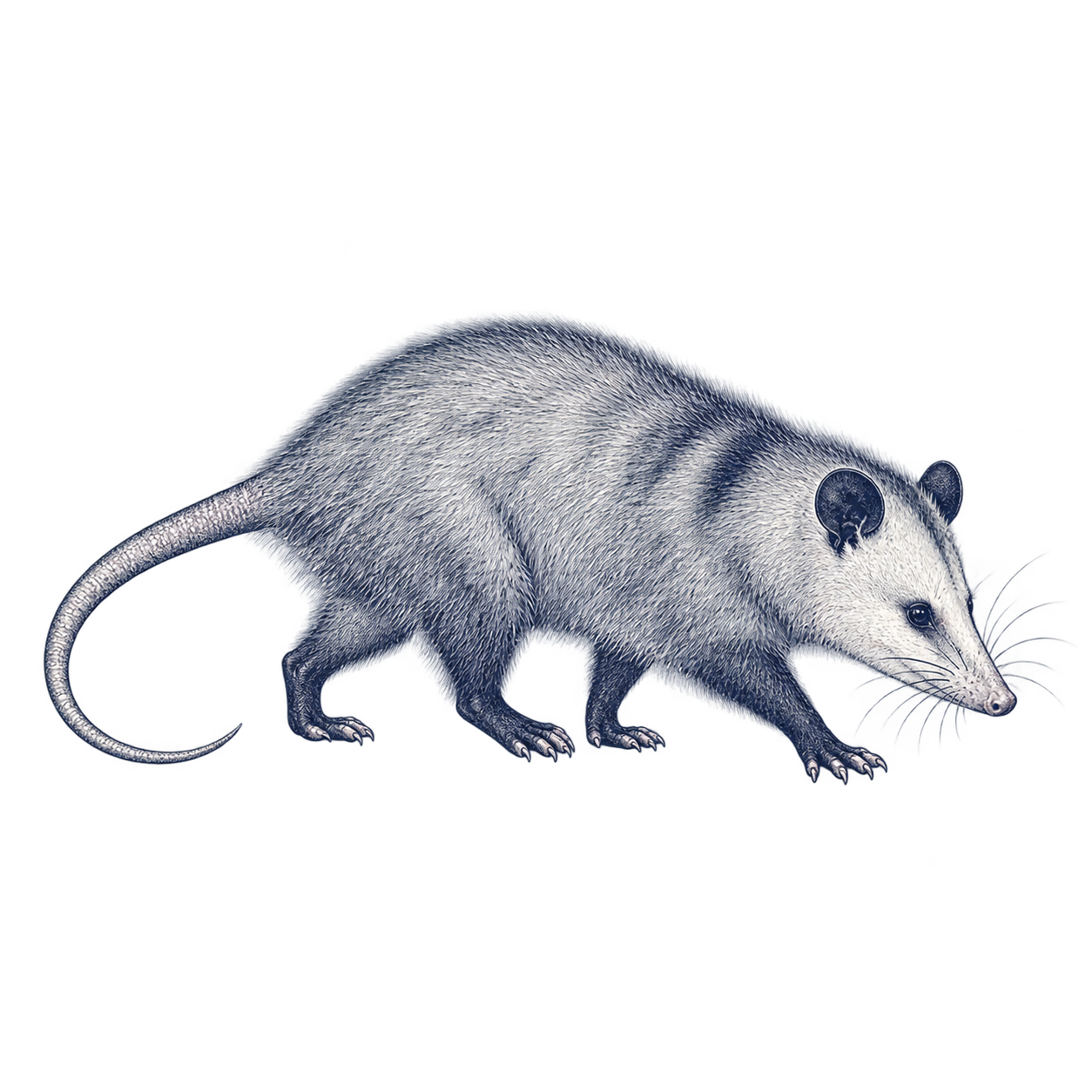
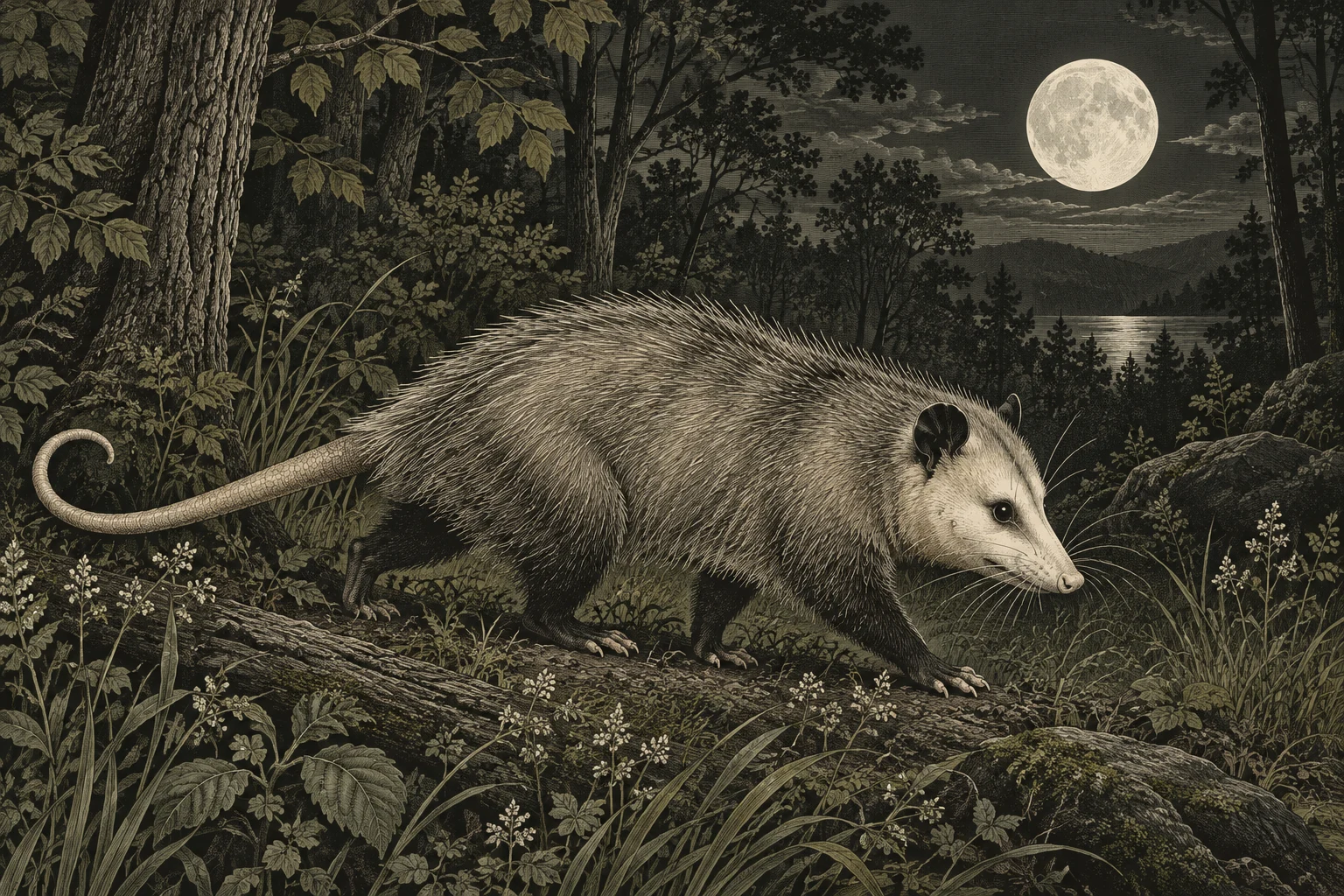
While we’re winding down, an opossum’s evening is just beginning. Nose to the ground, it follows the scent of its next meal through a familiar patchwork of gardens, trees and quiet corners.
07 / Shared spaces
A little understanding
goes a long way.
Many opossums are hit by vehicles each year. Watch for wildlife when driving at night and slow down where it’s safe to do so. If you see an injured animal, stop only where it’s safe and contact local wildlife help.
Observe from a distance. An opossum wandering through a garden usually needs a little space to carry on.
Supervise dogs, keep pets away and bring pet food indoors. Never encourage a close encounter.
Before sealing a shelter, make sure no animals or dependent young are inside. Ask a wildlife professional about humane exclusion.
Young opossums become independent at around 7–9 inches from nose to rump, excluding the tail. A healthy youngster over 9 inches usually needs space to carry on. Under 7 inches, injured, or unsure? Check our baby-opossum guidance and ask a licensed wildlife rehabilitator. Estimate from a distance rather than picking it up to measure.
08 / Simple things that matter
Coexistence starts small.
We share more than a property line. A few everyday choices make this a safer neighborhood for everyone.
Watch quietly, keep your distance and let them move on.
Supervise pets outdoors, especially after dark.
Close trash bins, bring in pet food and avoid deliberately feeding wildlife.
Don’t harm an opossum simply for being in your yard.
For an injured animal or possibly orphaned young, find a licensed wildlife rehabilitator.
09 / Common questions
Good questions.
Practical answers.
Opossums generally try to avoid conflict. Hissing and showing teeth are defensive warnings to give them space. They can bite if cornered or handled, so watch from a distance and keep pets away. A healthy opossum passing through your yard usually needs room to move on.
Rabies is uncommon in opossums, but they are not immune. If you’re bitten or suspect an exposure, wash the area with soap and water and seek prompt medical advice.
Read more: Bi-State Wildlife Hotline, Animal Diversity Web and CDC.
Give it space and keep pets from approaching. To discourage repeat visits, bring pet food indoors and secure garbage. Before closing access to a den, get professional advice on checking for animals and dependent young inside. If it appears injured or trapped, contact a licensed wildlife rehabilitator.
Read more: NC Wildlife and Primarily Possums.
No. Opossums are mainly nocturnal, but a daytime sighting alone does not establish illness. Observe from a distance. Visible injury, persistent tight circling or remaining exposed for a long time warrants a call to a wildlife rehabilitator. Hissing or drooling during a threatening encounter can be defensive behavior; it does not diagnose rabies.
Read more: NC Wildlife.
A small opossum is not necessarily orphaned. If a lone youngster’s body is under about 7 inches from nose to rump, excluding the tail, contact a licensed wildlife rehabilitator. Any injured youngster needs professional advice regardless of size. Size guides vary, so ask a professional about a borderline youngster rather than handling it to measure.
If you find a dead mother with live pouch young, do not pull attached babies off. Contact a rehabilitator for safe transport instructions, and stay out of traffic. Do not feed young opossums or force food or water; follow professional advice.
Read more: Tufts Wildlife Clinic, Wisconsin DNR and Primarily Possums.
This guide is about the Virginia opossum, an American marsupial, not a rodent. In everyday American speech, “possum” also means opossum. Australian possums, such as the common brushtail possum, are different marsupials.
Read more: Animal Diversity Web, Merriam-Webster and NSW Government.
10 / Look twice
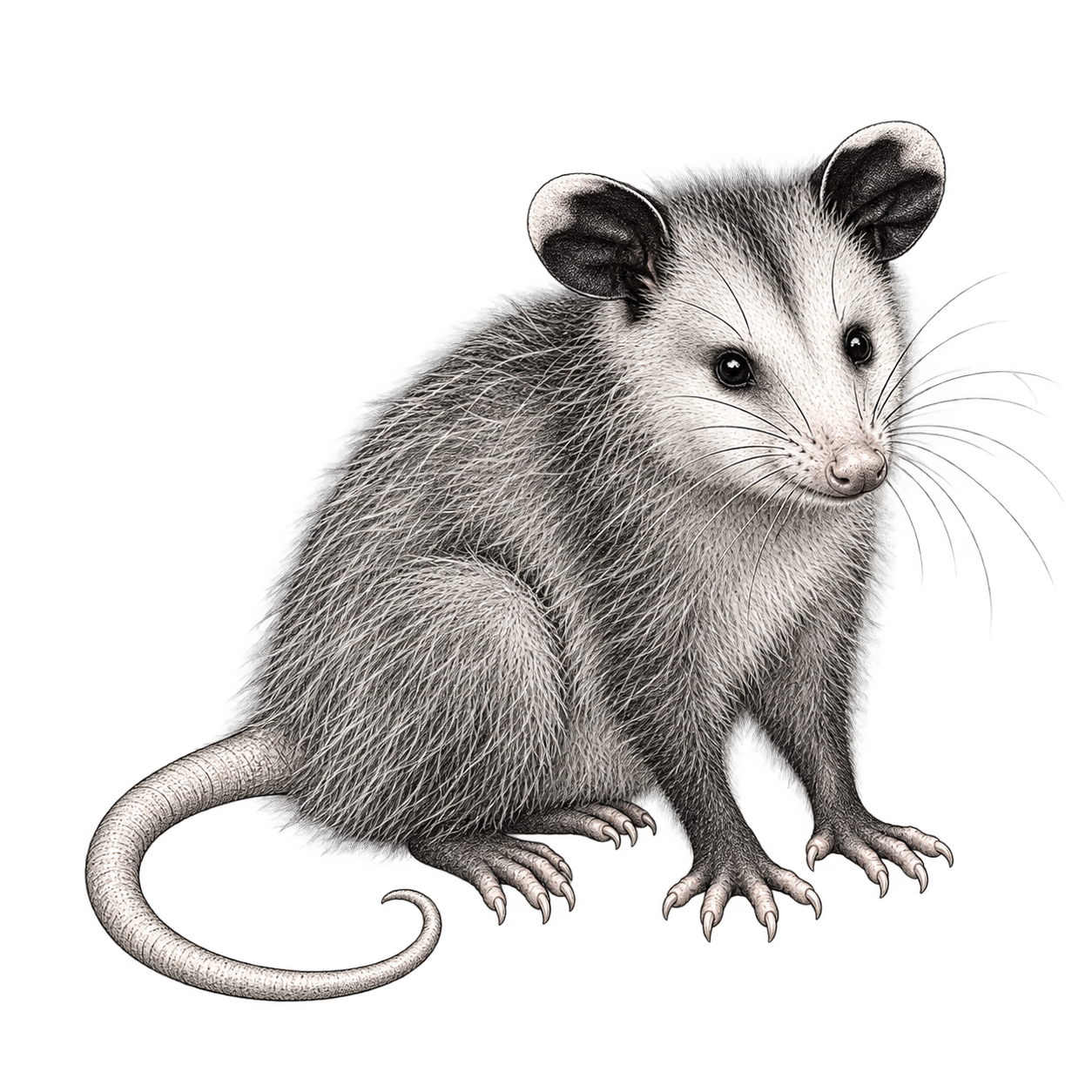
A familiar family.
A different perspective.
They’re resourceful. They’re remarkable. And they belong here, too.
Be a good neighbor